
Most people associate the mosque carpets with color or pattern. Actually, mosque carpet selection contributes to the everyday experience and feel of a praying space much more significantly. Sometimes worshippers spend hours standing, kneeling, and prostrating on the carpet as this is not a luxury. It is essential. Meanwhile carpets should be in good condition to accommodate regular foot traffic particularly during Friday prayers, Ramadan, and Eid without becoming worn out easily.
Another key consideration is the matter of cleanliness. A mosque carpet must be simple to maintain, fast to wash, and capable of remaining fresh even though it is used intensively daily. In addition to these utilities, carpets determine the spiritual environment of the mosque. The appropriate colors, patterns, and prayer row lines assist in establishing a peaceful and attentive atmosphere that facilitates worship and not distractions. Proper mosque carpet selection ensures these aspects are met.
Why Mosque Carpets Require Special Consideration
The carpets in mosques are not ordinary floorings. They must endure extreme daily wear and tear, bear the weight of the movements of prayer such as kneeling and prostration, keep clean, and have a calm appearance that adds to the spiritual ambience. Making the correct choice of carpet is a true difference maker in terms of comfort and durability. Thoughtful mosque carpet selection guarantees both functionality and spiritual harmony.
Difference Between Mosque Carpets and Commercial Carpets
Initially, the mosque carpets may appear similar to the carpets found in offices or hotels but they are quite different. In the first place, the pattern is meant to direct the rows of prayers in order to assist worshippers to straighten their line without any distraction.
The pile is comfortable to kneel and prostrate on yet thick enough to endure heavy traffic without exhaustion. The materials used are durable, stain-resistant, and easy to clean because mosques are subject to continuous usage. The color and design are also meant to be very calm and focused and not merely decorative. In brief, mosque carpet selection focuses on both comfort and functionality, not only aesthetics.
Impact of Carpet Quality on Worship Experience
Having a good mosque carpet makes the way people feel when praying different. Kneeling and prostrating become easier with softer and well-supported carpets. Obvious patterns assist rows to remain straight and promote concentration and discipline. Strong materials imply that the space is well-maintained. It establishes a setting in which worshippers will not be distracted by anything. Low-quality carpets, on the other hand, can have uneven wear, be uncomfortable, and even create a disorganized look. Proper mosque carpet selection ensures that the worship experience is enhanced rather than hindered.
Essential Practical Factors When Selecting Mosque Carpets
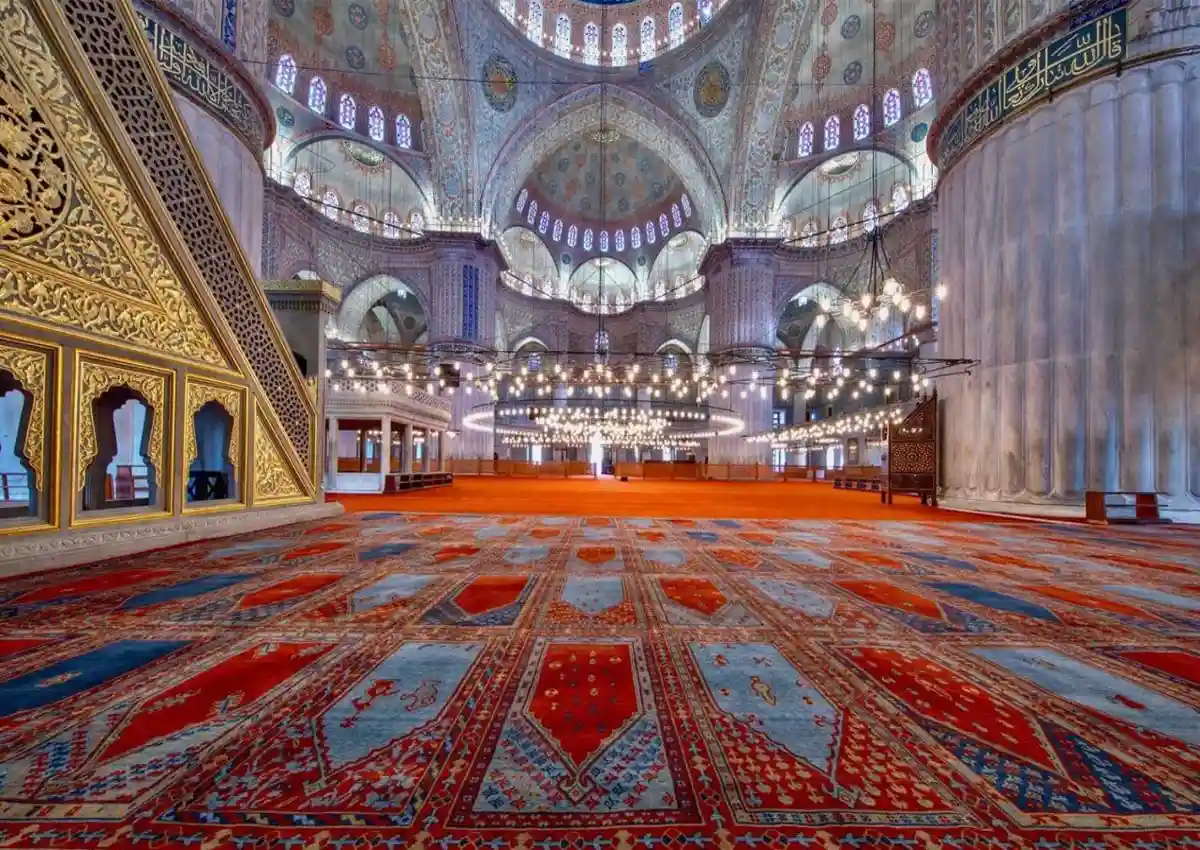
In selecting carpet in a mosque, color or pattern is not the only thing to consider. The right carpet must be comfortable, durable, maintainable, as well as presentable, at the same time giving a serene worship environment. These are the key practical considerations that should be remembered in every mosque carpet selection.
Carpet Materials and Their Performance
The fabric of your mosque carpet is one of the factors that influence the feel, life span, and ease of maintaining your carpet. Wool is naturally smooth, durable, and very comfortable, especially when long prayers are involved, and it can even take decades if properly cared for. Nylon is very resistant and does not stain easily, thus a good option in mosques that have an intense flow of people.
Olefin (polypropylene) is lightweight and moisture-resistant and can be washed easily but may wear out when used continuously. Blended fibers are used in many mosques to combine the advantages of various materials, e.g., wool for comfort and nylon for durability.
Along with comfort and longevity, one should not ignore cleaning. Some materials are better suited to deep cleaning or steam washing. When the carpet is used almost continuously, easy cleaning can help a great deal. Selecting an appropriate style of the material makes the carpet not just comfortable to walk on but also keeps it fresh for years. Thoughtful mosque carpet selection takes all these factors into account.
Wool, Nylon, Olefin, and Blended Fibers Explained
-
Wool: Soft, naturally flame-resistant, and long-lasting. It gives a plush feel for kneeling and prostration but can be more expensive.
-
Nylon: Strong, resilient, and excellent for stain resistance. It holds up well under heavy traffic and cleaning.
-
Olefin/Polypropylene: Moisture-resistant and easy to clean. Less durable than wool or nylon and ideal for areas prone to spills or dampness.
-
Blended Fibers: Mixes of wool and synthetic fibers aim to combine comfort, durability, and affordability.
Best Material Choice for High-Traffic Mosques
Nylon or high-quality wool blends tend to work best for mosques with heavy use. They combine durability with comfort and handle frequent cleaning without wearing out quickly. If your priority is maintenance, synthetic blends may be easier to care for while still supporting a comfortable worship experience. Correct mosque carpet selection ensures a balance between these needs.
Durability and Wear Resistance
The ability of the mosque carpet to withstand constant traffic is one of the greatest considerations in mosque carpet selection. A carpet that becomes worn easily not only looks bad but also impacts comfort during prayer. The key factors to durability are:
-
The type of fiber
-
The density of the pile
-
The weaving method
-
The quality of the backing
The carpet will only be dense and tightly woven so that it is not easily matted and flattened even when hundreds of people walk, kneel, and prostrate on it daily.
Long-term costs are also minimized by using durable carpets. A well-selected carpet can last at least ten years with constant attention, as opposed to replacing worn carpets every few years. Since it preserves its shape and look, it keeps the prayer hall presentable and enhances the worship experience.
Fiber Density, Weaving Technique, and Backing Strength
Fiber density is key. The more the fibers are closely packed, the deeper and firmer the surface. The method of weaving is also important. Either hand-tufted or machine-woven carpeting is more likely to stand up.
The other frequently neglected factor is backing strength. Good support maintains the carpet flat so that it does not ripple and stays in position despite heavy daily traffic. All these combine to create a longer-lasting and more comfortable walk on the mosque carpet. Proper mosque carpet selection considers these factors carefully.
Comfort, Cushioning, and Underfoot Support
Comfort is often overlooked until one spends an hour or more on a hard surface in prayer. When it comes to mosque carpets, it is not only about appearance or quality but also the feel during kneeling and prostration. A thin and hard carpet makes long prayers less comfortable, whereas one with proper padding supports knees, feet, and joints effectively.
Support on the bottom feet also influences safety and stability. When a carpet moves, it can distract worshippers or cause minor inconvenience. Selecting the correct thickness and density promotes a uniform, comfortable surface for all. Proper mosque carpet selection ensures both comfort and focus.
Carpet Thickness, Padding, and Foam Underlay
It is not just the carpet itself. Foam underlay or padding can make a lot of difference. Thicker carpet and underlay cushion the knees and absorb the force of walking or prostration. Too thin feels hard; too soft becomes unstable. The ideal mix is comfortable, durable, and practical, providing a surface that supports worshippers while lasting for years. Correct mosque carpet selection includes consideration of padding and underlay as well.
Pile Type Selection for Mosques
Comfort and durability depend on the kind of pile that you have. The mosque carpets are normally designed with a low pile making it easy to kneel and prostrate without complicating the maintenance and wear is minimal.
Low-Pile vs Loop-Pile vs Cut-Pile Carpets
- Low-Pile: Short fibers, easy to clean and perfect for high-traffic areas. Offers a smooth surface for prayer movements.
- Loop-Pile: Loops of fiber create durability but they can feel firmer under the knees. Good for entrances or hallways and less ideal for main prayer areas.
- Cut-Pile: Fibers are cut at the top for a plush feel. Comfortable but may show wear faster and require more maintenance.
For most mosques, low-pile or carefully blended cut-and-loop carpet balances comfort, durability and upkeep to make prayer more pleasant for everyone.
Safety, Slip Resistance and Stability
Safety is not something that you always pay attention to until something goes wrong. People are always walking, sitting, standing and moving in and out of the prayer rows in a mosque and therefore the carpet must remain well fixed. An effective mosque carpet must be well-supported and well-laid so that it does not shift, ripple or have loose corners that may make one slip or fall.
Slip resistance is particularly required around the entrances and wudu areas which are more likely to be moist. Once the carpet is firm and safe, the worshipers can move freely and safely without being distracted or endangered.
Aesthetic, Color and Design Considerations
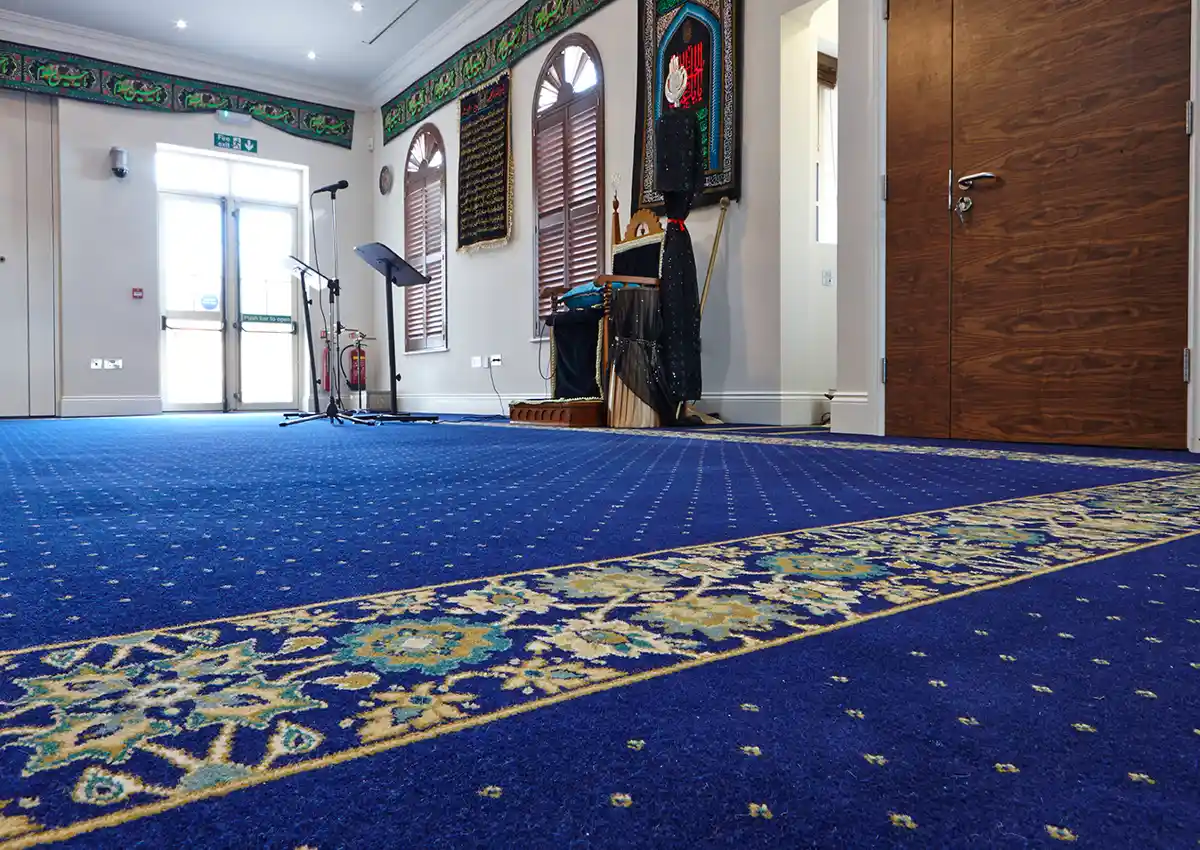
Aesthetics are as important as performance when choosing carpets for a mosque. The right carpet creates a visual backdrop of the prayer hall and silently determines the feeling of the people as they enter the room. The correct color and design can turn a mosque into a serene, well-structured and inviting space whereas ineffective selection can cause a disruption or overcrowding of the area. Good design does not just attract visitors. It favors concentration and unity in worship.
Choosing the Right Carpet Color for Mosque Interiors
The choice of colour does not only influence how it looks. It determines the appearance of the space, the brightness of the room and the comfort of worshippers in prayer. The majority of mosques select colours which are grounded and calming like deep reds, blues, greens or neutral earth tones. Such shades are more likely to conceal a small stain and wear as opposed to very light color that can reveal dirt easily in busy places.
The mosque is also to be lit by color. The carpet interacts with natural lighting, chandeliers and wall finishes. An effective color gives the space warmth and peace unlike an austere and gloomy look.
Light vs Dark Colors (Maintenance and Lighting Impact)
Light-colored carpets can make a mosque feel open and bright especially in smaller spaces but they usually require more frequent cleaning. Darker colors are easier to maintain and better at hiding wear making them a practical choice for busy mosques. The best option often sits somewhere in between. Rich and medium tones that feel welcoming without being hard to maintain.
Prayer Row Alignment and Carpet Layout
One of the most important design features of a mosque carpet is prayer row alignment. Fine lines or patterns woven into the carpet help worshippers form straight rows naturally without verbal guidance. When done well, these lines are clear but not distracting. A thoughtful carpet layout also considers the mihrab and qibla direction so that everything feels visually aligned and organized during prayer.
Islamic Patterns, Motifs and Cultural Harmony
The Islamic patterns are beautiful and do not compromise on the spirituality of the space. Geometrical designs and traditional motifs are common as they are timeless and meaningful without affecting the focus on worship. Cultural harmony is important as well. Patterns and colors tend to be an expression of the local traditions or local preferences. When the design considers both culture and faith, the carpet would be a mute and supportive element of the worship experience instead of a point of attention.
Hygiene, Cleanliness and Environmental Factors
Mosque maintenance is not just about looks. Clean carpets maintain the health of the worshippers and make the prayer area appear clean and inviting. Mosques are frequented by people every day and in large numbers and therefore carpets should be able to absorb spills, moisture, cleaning and deterioration. Hygiene becomes much easier to manage long-term when considered from the very beginning.
Stain Resistance and Spill Protection
A mosque cannot be without spills. Wudu water, beverages carried by children or shoe dirt near the doors are all deposited on the carpet. A mosque carpet that is stain-resistant makes the work of caretakers a lot easier. Anti-absorbent fibers enable spills to be washed up fast before leaving any traces or smell. This ensures that the carpet remains clean and less harsh cleaning techniques are required to maintain it. Good stain resistance allows the carpet to retain its appearance and last longer as time goes by.
Mold, Moisture and Humidity Management
One of the largest issues of mosque carpets is moisture particularly in wet climates or in buildings that have close wudu facilities. When moisture is trapped in the carpet or underlay it may cause mold and unpleasant odors.
It is possible to avoid by selecting materials that dry fast and ensure air can move through. Correct mounting and sound quality backing are also significant factors. With proper moisture control, the carpet becomes healthier and more comfortable for all.
Easy Cleaning and Long-Term Maintenance Needs
A good mosque carpet should be easy to clean without special equipment or long downtime. Regular vacuuming, simple spot cleaning and periodic deep cleaning should be enough to keep it in good condition. Carpets that handle cleaning well save time and money and reduce disruption to prayer schedules. Over the years, this makes maintenance simpler and helps the carpet stay comfortable, clean and presentable for the community.
Measuring, Planning and Customization Options
Some planning before deciding on a carpet is always a good idea. By taking time and measuring the space properly, as well as planning the layout, one can avoid errors, which are costly in the future. Each mosque is not similar, and therefore proper mosque carpet selection ensures the carpet fits the area naturally and is comfortable for prayer.
Accurate Floor Measurement and Space Planning
Accurate measurements are the foundation of good mosque carpet selection. This includes the full prayer hall, side areas, columns, mihrab space, and any walkways. Clear measurements help make sure prayer rows line up properly and seams fall in less noticeable places.
Planning also means thinking about entrances, shoe areas, and wudu spaces where extra durability may be needed. When the space is planned well, installation is smoother, and the finished result supports a clean and organized appearance.
Custom Mosque Carpet Designs and Sizes
Many mosques choose custom carpet options because standard sizes and patterns do not always fit the space perfectly. Custom mosque carpets dubai allow prayer row spacing, colors, and patterns to match the exact layout of the hall. Custom sizing also reduces waste and awkward seams, helping the carpet last longer and look better over time. Thoughtful mosque carpet selection includes considering custom options for the best fit and performance.
Choosing the Right Mosque Carpet Supplier
Selecting the right supplier is just as important as choosing the carpet itself. A reliable supplier understands the specific needs of mosques and can guide you through materials, designs, and installation without pushing unnecessary options. Working with someone experienced reduces mistakes and helps the project run smoothly from start to finish.
Evaluating Supplier Experience and Market Reputation
Look for suppliers who have real experience with mosque carpets, not just general flooring. Ask to see past projects, especially in active prayer halls. A good reputation usually shows in consistent quality, clear communication, and honest advice. Reviews and referrals from other mosques and long-term presence in the market are strong signs that a supplier can be trusted for proper mosque carpet selection.
Key Questions to Ask Before Purchasing
Before making a decision, ask simple but important questions: How long will the carpet last under heavy use? How easy is it to clean? Does the supplier handle installation and after-sales support? Are custom designs available and what is the lead time? Clear answers help you avoid surprises and make confident decisions in mosque carpet selection.
Practical Maintenance Tips to Extend Carpet Lifespan
Once the carpet is installed, regular care keeps it looking good and lasting longer. Good maintenance does not have to be complicated or expensive. Small and consistent steps make a big difference over time and help avoid early wear or damage. Proper mosque carpet selection also considers how easy the carpet will be to maintain.
Daily, Weekly and Seasonal Carpet Care
Daily care mainly means quick checks and light vacuuming in busy areas to remove dust and dirt before it settles into the fibers. This is especially helpful near entrances and main walkways. Weekly cleaning should include a full vacuum of the prayer hall. Also, spot clean any spills or marks as soon as they appear.
Seasonal care involves deeper cleaning. Every few months, professional or deep cleaning helps refresh the carpet and remove dirt that regular vacuuming cannot reach. Letting the carpet dry fully before use is important. With simple routine care, mosque carpet selection supports longevity and continued comfort for worshippers.
Common Mosque Carpet Maintenance Mistakes
One common mistake is waiting too long to clean spills or stains and hoping they will disappear on their own—they usually don’t. Another issue is overusing water during cleaning, which can leave moisture trapped and cause odors later.
Some mosques skip regular vacuuming thinking deep cleaning is enough—it’s not. Using harsh chemicals or the wrong cleaning method can also damage the carpet faster than normal wear. Proper mosque carpet selection considers ease of maintenance to avoid these common issues.
Make an Informed and Sustainable Choice!
At the end of the day, mosque carpet selection is about making a choice that serves people for years, not just something that looks good on day one. When you think about comfort, durability, cleanliness, and design together, the decision becomes much clearer.
A well chosen carpet supports worship, makes maintenance easier and creates a calm space everyone feels comfortable in. Taking the time to plan properly and choose wisely means fewer problems later and a prayer hall that continues to feel welcoming, clean and respectful for the whole community.
Frequently Asked Questions
What is the best carpet material for mosques?
There is no single perfect material, but wool and nylon blends work very well for most mosques. Wool feels comfortable and lasts a long time, while nylon adds strength and makes cleaning easier. This combination handles heavy use without losing comfort.
How often should mosque carpets be cleaned?
Light vacuuming should happen several times a week, especially in busy areas. Deep cleaning is usually needed every few months depending on foot traffic. During Ramadan or after large gatherings, more frequent cleaning helps keep the space fresh.
Are custom mosque carpets more durable?
Custom mosque carpets are not automatically stronger, but they often perform better because they fit the space properly. A better fit means fewer seams and less movement, which reduces wear and helps the carpet last longer.
How long do mosque carpets typically last?
With good materials and regular care, mosque carpets can last anywhere from eight to fifteen years. High-traffic areas may show wear sooner, but proper maintenance can extend the carpet’s life significantly.